SOCIALIZATION AND MAPPING OF OYSTER FINDERS' CHARACTERISTICS IN THE EFFORTS TO MANAGE THE KRUENG CUNDA WATER ENVIRONMENT, LHOKSEUMAWE CITY
Published:
2025-12-18Downloads
Abstract
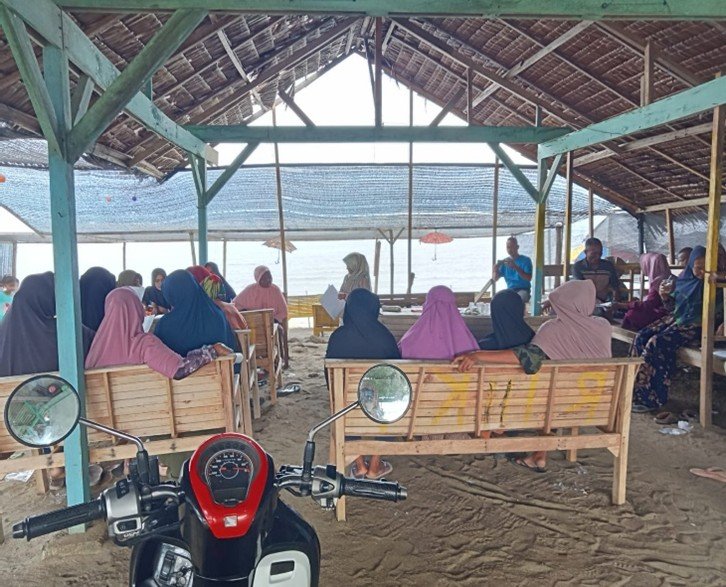
Coastal communities in Lhokseumawe City are highly dependent on aquatic resources, one of which is through oyster harvesting. This activity has become part of the community's traditions and lifestyle, utilizing natural resources in a simple way and has been passed down from generation to generation. This community service program was conducted to identify the social characteristics of oyster gatherers and encourage sustainable oyster management in the Krueng Cunda area. The methods used included outreach and a questionnaire survey. Data were obtained through interviews and direct observation with 30 residents who were gathering oysters at several coastal locations in Lhokseumawe. Descriptive analysis was conducted to describe the general profile of oyster gatherers. The results showed that most oyster gatherers were of productive age and the majority were women. This activity is carried out with simple tools and is heavily influenced by tidal conditions. In addition to serving as a source of income, oyster gathering also has social and cultural value because it is carried out collectively and passed down within families. This condition reflects the close relationship between the community and the coastal environment. Therefore, efforts are needed to manage oysters sustainably while improving the welfare of coastal communities.
Keywords:
Marine Resource Sustainability Coastal Communities Oyster Seekers Characteristics.References
Dahuri, R., Rais, J., Ginting, S. P., & Sitepu, M. J. (2018). Pengelolaan sumber daya wilayah pesisir dan lautan secara terpadu. Jakarta: Pradnya Paramita.
Dahuri, R. (2019). Pengelolaan Sumberdaya Wilayah Pesisir dan Lautan Secara Terpadu. Jakarta: Pradnya Paramita.
Ellis, F. (2000). Rural Livelihoods and Diversity in Developing Countries. Oxford: Oxford University Press.
Rismawati, U., Afiati, N., & Suprapto, D. (2015), “Struktur Populasi Tiram (Saccostrea Cuccullata Born, 1778) Pada Ekosistem Mangrove Dan Non-mangrove Di Semarang, Jawa Tengah”, Management of Aquatic Resources Journal (MAQUARES), 4(2), 48-57.
Satria, A. (2015). Pengantar Sosiologi Masyarakat Pesisir. Jakarta: Yayasan Pustaka Obor Indonesia.
Savitri, Y. D. (2023). Analisis bioakumulasi logam berat pada tiram (Crassostrea irredalei). Malang: Universitas Brawijaya.
Syamsuddin, S., & Bahri, M. (2020), “Faktor sosial ekonomi dalam pengelolaan sumber daya pesisir”, Jurnal Sosial Maritim, 4(1), 12–20.
SUPII, A. I., & Arthana, I. W. (2009), “Studi Kualitas Perairan pada Kegiatan Budidaya Tiram Mutiara (Pinctada maxima) di Kecamatan Gerokgak, Kabupaten Buleleng, Bali”, Ecotrophic. .az
Tanjung, R. (2021). Sosiologi Masyarakat Pesisir: Dinamika Sosial dan Ekonomi di Kawasan Pantai Indonesia. Medan: Pustaka Maritim Nusantara.
License
Copyright (c) 2025 Ekamaida, Dewi Kumala Sari

This work is licensed under a Creative Commons Attribution-ShareAlike 4.0 International License.
Downloads
How to Cite