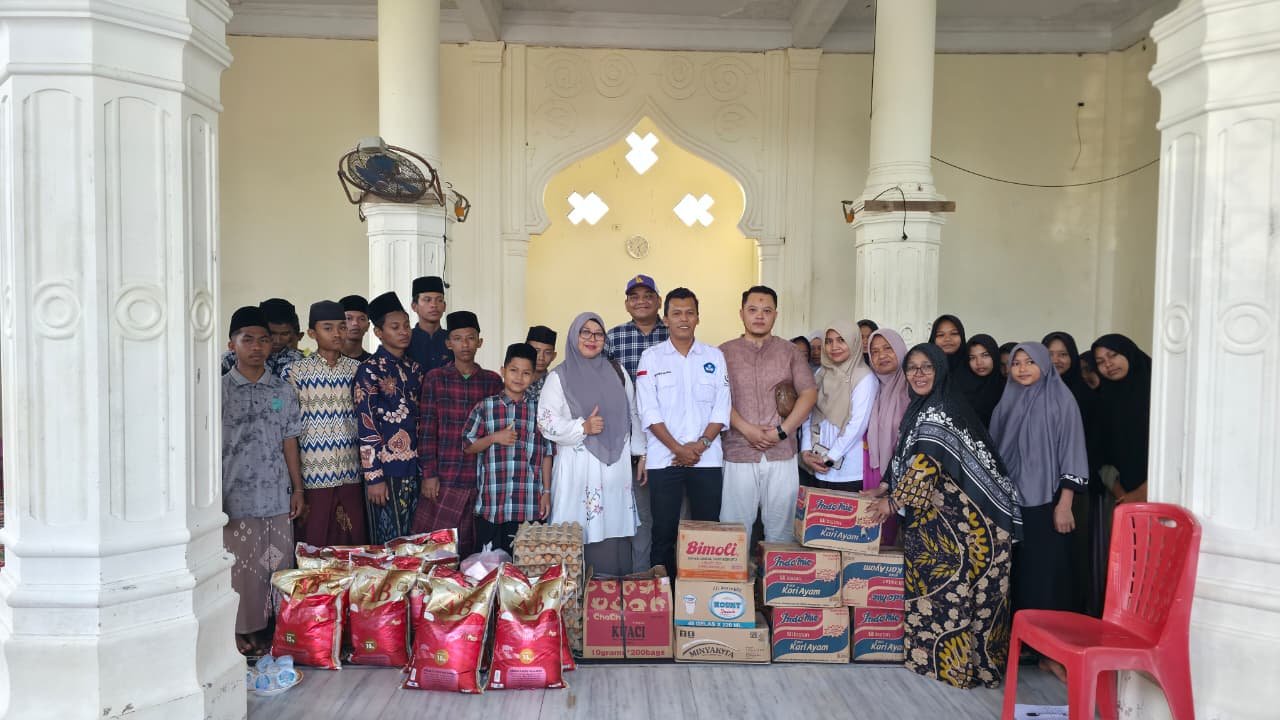
DISTRIBUTION OF HUMANITARIAN AID TO THE MIFTAHUL JANNAH ORPHANAGE AFFECTED BY FLOODS
Published:
2026-01-21Downloads
Abstract
Floods are one of the most frequent natural disasters in Indonesia and have a significant impact on vulnerable groups, including children living in orphanages. Miftahul Jannah Orphanage is one of the social institutions affected by the floods, disrupting their caregiving activities, health, and the psychosocial well-being of the children. This study aims to analyze the process and impact of the distribution of humanitarian aid to Miftahul Jannah Orphanage after the floods. The method used is a descriptive qualitative approach with a case study design. Data collection was conducted through field observations, semi-structured interviews with orphanage administrators, orphanage children, and volunteers, and documentation of aid distribution activities. Data were analyzed using thematic analysis to identify patterns of needs, benefits of aid, and implementation challenges. The results show that the distribution of humanitarian aid has a positive impact on meeting basic needs, improving environmental hygiene and health, and restoring the psychosocial conditions of orphanage children. However, challenges remain in the logistical aspects and sustainability of aid. This study concludes that needs-based humanitarian assistance, targeted at vulnerable groups, and integrating material assistance and psychosocial support, is crucial for supporting sustainable post-disaster recovery. These findings are expected to serve as a reference for the development of future humanitarian assistance and community service programs.
Keywords:
humanitarian aid flood orphanage vulnerable children community serviceReferences
BNPB. (2023). Indeks risiko bencana Indonesia. Badan Nasional Penanggulangan Bencana.
International Journal of Disaster Risk Reduction. (2015). Children and cultural influences in a natural disaster: Flood response in Surakarta, Indonesia. International Journal of Disaster Risk Reduction, 13, 76–84. https://doi.org/10.1016/j.ijdrr.2015.05.002
Ilham, R. N., Muttaqieen, & Likdanawati. (2021). Peran pengabdian masyarakat dalam penanganan dampak sosial pasca bencana alam di wilayah pesisir Aceh. Jurnal Pengabdian kepada Masyarakat (JPKM) Malikussaleh, 2(2), 85–94.
Ilham, R. N., & Likdanawati. (2020). Strategi pemberdayaan masyarakat rentan pasca bencana melalui pendekatan sosial dan kemanusiaan. Jurnal Ilmiah Mahasiswa Ekonomi Pembangunan, 5(3), 211–220.
Likdanawati, Ilham, R. N., & Muttaqieen. (2023). Penguatan ketahanan sosial kelompok rentan melalui program bantuan kemanusiaan pasca bencana. Jurnal Pengabdian Masyarakat Nusantara, 4(1), 101–110.
Muttaqieen, Ilham, R. N., & Likdanawati. (2022). Pendekatan berbasis komunitas dalam mitigasi dan pemulihan pasca bencana banjir di Aceh Utara. Jurnal Administrasi Publik dan Pembangunan, 4(1), 33–42.
Norris, F. H., Friedman, M. J., Watson, P. J., Byrne, C. M., Diaz, E., & Kaniasty, K. (2002). 60,000 disaster victims speak: Part I. An empirical review of the empirical literature, 1981–2001. Psychiatry, 65(3), 207–239. https://doi.org/10.1521/psyc.65.3.207.20173
Oktaviani, D., Puspaningrum, S., Mauliva, F., Azizah, N. H., & Nawangsari, E. R. (2024). Implementasi penyaluran bantuan sosial kepada korban bencana banjir di Kecamatan Waru Kabupaten Sidoarjo. Reslaj: Religion Education Social Laa Roiba Journal, 6(1), 123–134. https://journal-laaroiba.com/ojs/index.php/reslaj/article/view/2972
Peek, L. (2008). Children and disasters: Understanding vulnerability, developing capacities, and promoting resilience—An introduction. Children, Youth and Environments, 18(1), 1–29.
Save the Children. (2019). Children and disaster risk reduction. Save the Children International.
Sphere Association. (2018). The Sphere handbook: Humanitarian charter and minimum standards in humanitarian response. Sphere Association.
Trisasmita, L. (2022). Edukasi dan sosialisasi perilaku hidup bersih dan sehat (PHBS) pasca banjir di Panti Asuhan Furqan Sumang Kota Makassar. Sarwahita: Jurnal Pengabdian kepada Masyarakat, 19(2), 203–212. https://journal.unj.ac.id/unj/index.php/sarwahita/article/view/27922
UNDRR. (2021). Human cost of disasters: An overview of the last 20 years (2000–2019). United Nations Office for Disaster Risk Reduction.
WHO. (2020). Flooding and communicable diseases fact sheet. World Health Organization.
Wisner, B., Blaikie, P., Cannon, T., & Davis, I. (2014). At risk: Natural hazards, people’s vulnerability and disasters (2nd ed.). Routledge.
Yesmin, F., & Akter, R. (2025). Toward equitable recovery: A fairness-aware framework for prioritizing post-flood aid. arXiv preprint. https://arxiv.org/abs/2512.22210
License
Copyright (c) 2026 Rico Nur Ilham, Irada Sinta, Likdanawati, Hamdiah, Muttaqien, Reza Juanda

This work is licensed under a Creative Commons Attribution-ShareAlike 4.0 International License.
Downloads
How to Cite