REVIVING TRADITIONAL JAMU: THE CREATION OF HERBALIS MILK IN KELURAHAN KARYA JAYA, TEBING TINGGI
DOI:
10.5281/zenodo.19464624Published:
2026-01-28Downloads
Abstract
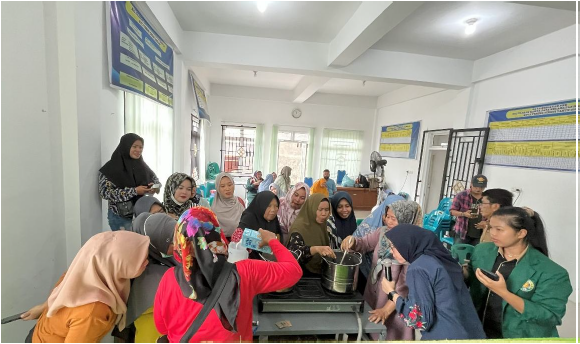
Kelurahan Karya Jaya is a community where a significant number of people engage in jamu production. The community service program Revitalizing Traditional Jamu: The Development of Herbalis Milk in Kelurahan Karya Jaya, Tebing Tinggi aims to strengthen the potential of traditional jamu by innovating their presentation into herbal-based milk products. Jamu, one of Indonesia’s cultural heritage, is frequently viewed as unappealing to younger generations because of its bitter flavor and traditional presentation. Transforming jamu into herbal milk not only enhances its taste but also boosts its nutritional benefits and makes it more acceptable to consumers, particularly children and young people. The problems identified include limited knowledge of residents in product diversification, lack of skills in hygienic and modern processing, and minimal access to packaging technology that is attractive and marketable. To resolve these challenges, we provide training and workshops on turning jamu into herbalis milk, practical guidance and direct teaching during the production process, as well as assistance in packaging and marketing strategies. This activity is expected to revitalize the traditional jamu culture, create added economic value for the community, and open wider market opportunities through innovative herbal milk products. The methods used in this service activity are training and practice, mentoring, and monitoring and evaluation.
Keywords:
Jamu herbalis milkReferences
Amalia, F. A., Aprianingsih, A., & School of Business and Management, Institut Teknologi Bandung, Indonesia. (2017). Business Model of Jamu as Indonesian Traditional Herbal Medicine in New Economy. The Asian Journal of Technology Management (AJTM), 10(1), 19–28. https://doi.org/10.12695/ajtm.2017.10.1.3
Barcenilla, C., Álvarez-Ordóñez, A., López, M., Alvseike, O., & Prieto, M. (2022). Microbiological Safety and Shelf-Life of Low-Salt Meat Products—A Review. Foods, 11(15), 2331. https://doi.org/10.3390/foods11152331
Elfahmi, Woerdenbag, H. J., & Kayser, O. (2014). Jamu: Indonesian traditional herbal medicine towards rational phytopharmacological use. Journal of Herbal Medicine, 4(2), 51–73. https://doi.org/10.1016/j.hermed.2014.01.002
Khalid, M. (2024). The Rise of Functional Beverages: A Revolution in the Drink Industry.
Mafe, A. N., Edo, G. I., Makia, R. S., Joshua, O. A., Akpoghelie, P. O., Gaaz, T. S., Jikah, A. N., Yousif, E., Isoje, E. F., Igbuku, U. A., Ahmed, D. S., Essaghah, A. E. A., & Umar, H. (2024). A review on food spoilage mechanisms, food borne diseases and commercial aspects of food preservation and processing. Food Chemistry Advances, 5, 100852. https://doi.org/10.1016/j.focha.2024.100852
Nurcholis, W., & Arianti, R. (2024). Jamu as Indonesian Cultural Heritage and Modern Health Innovation. Jurnal Jamu Indonesia, 9(1), 1–2. https://doi.org/10.29244/jji.v9i1.317
Putra, Y. A. D., & Abryanto, R. (n.d.). THE IMPACT OF PERCEIVED VALUE OF JAMU TOWARDS THE MILLENNIAL PURCHASE DECISION: THE CASE STUDY OF GENERATION Z.
License
Copyright (c) 2026 Isfenti Sadalia, Beby Kendida Hasibuan, Marina Wulandari Nasution, Dona Tiara Lubis, Lailan Syafrina Hasibuan

This work is licensed under a Creative Commons Attribution-ShareAlike 4.0 International License.
Downloads
How to Cite