SMART RECOVERY ACEH MODEL: INTEGRATING EMERGENCY EDUCATION AND MSME EMPOWERMENT FOR COMMUNITY-BASED POST-DISASTER RECOVERY
Published:
2026-04-09Downloads
Abstract
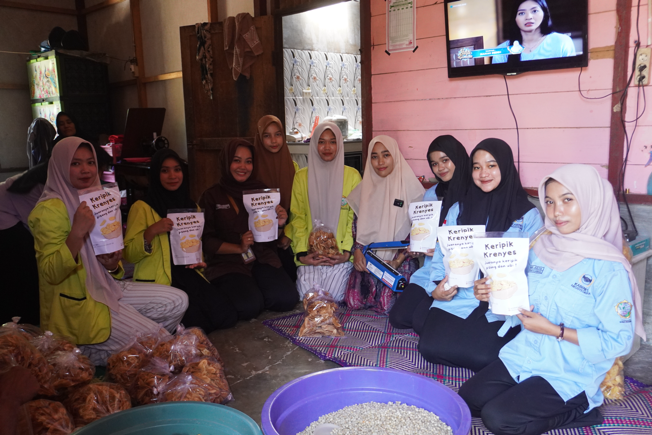
The flood disaster that occurred in North Aceh on November 26, 2025, significantly disrupted the social and economic conditions of affected communities, particularly in Keude Geudong Village. This study aims to examine the effectiveness of a community-based post-disaster recovery model that integrates emergency education and micro, small, and medium enterprise (MSME) empowerment. A community-based participatory approach was employed, involving two main target groups: school-aged children and MSME actors. Data were collected through observations, interviews, and program documentation, and analyzed using descriptive quantitative and qualitative methods. The results show that the social intervention successfully restored access to education, achieving over 80% participation and improving children’s learning motivation and psychosocial well-being. In the economic sector, MSMEs experienced a 40–60% increase in production capacity and a 25–35% increase in income, supported by improved financial management and digital marketing adoption. The integration of appropriate technology and continuous mentoring further enhanced program effectiveness and sustainability. This study highlights that combining social and economic interventions within a community-based framework can generate synergistic impacts and strengthen post-disaster resilience. The proposed model offers a practical and replicable approach for sustainable recovery in disaster-affected communities.
Keywords:
Keywords: Post-disaster recovery; community-based approach; emergency education; MSMEs empowerment; digital transformation; community resilienceReferences
Aldrich, D. P., & Meyer, M. A. (2015). Social capital and community resilience. American Behavioral
Scientist, 59(2), 254–269. https://doi.org/10.1177/0002764214550299
Eggers, F. (2020). Masters of disasters? Challenges and opportunities for SMEs in times of crisis. Journal
of Business Research, 116, 199–208. https://doi.org/10.1016/j.jbusres.2020.05.025
Humphrey, J., & Schmitz, H. (2002). How does insertion in global value chains affect upgrading in
industrial clusters? Regional Studies, 36(9), 1017–
1027. https://doi.org/10.1080/0034340022000022198
Masten, A. S., & Narayan, A. J. (2012). Child development in the context of disaster, war, and
terrorism. Annual Review of Psychology, 63, 227–257.
https://doi.org/10.1146/annurev-psych-120710-100356
Nicolai, S., & Triplehorn, C. (2003). The role of education in protecting children in conflict. Humanitarian
Practice Network Papers.
OECD. (2021). The digital transformation of SMEs. OECD Publishing.
Peek, L. (2008). Children and disasters: Understanding vulnerability, developing capacities, and promoting
resilience. Children, Youth and Environments, 18(1), 1–29.
Rose, A. (2007). Economic resilience to natural and man-made disasters. Environmental Hazards, 7(4),
383–398. https://doi.org/10.1016/j.envhaz.2007.10.001
Shaw, R. (2014). Community-based disaster risk reduction. Emerald Group Publishing.
Tierney, K. (2007). Businesses and disasters: Vulnerability, impacts, and recovery. Handbook of Disaster
Research, 275–296.
Trucano, M. (2016). ICT in education: What works and what doesn’t. World Bank.
UNDP. (2020). Digital solutions for MSME resilience. United Nations Development Programme.
License
Copyright (c) 2026 Intan Maulida, Lia Rista, Almunadiya, Raudha Tinur, Rahmiatul Aula, Muhammad Multazam

This work is licensed under a Creative Commons Attribution-ShareAlike 4.0 International License.