THE CETAK SAWAH RAKYAT PROGRAM: EFFORTS TO INCREASE RICE PRODUCTION IN THE ARCHIPELAGIC REGION OF SALANG DISTRICT, SIMEULUE REGENCY
Published:
2026-07-27Downloads
Abstract
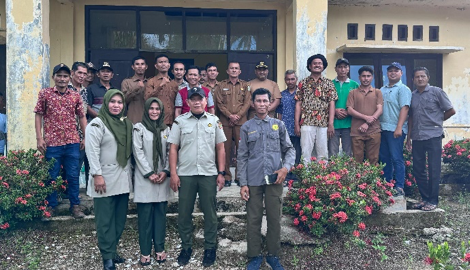
The Cetak Sawah Rakyat (CSR) program conceptually executed as a paddy field optimization initiative is a government strategy aimed at increasing rice production and strengthening food security by enhancing land productivity and cropping intensity. As an archipelagic region, Simeulue Regency possesses significant potential for rice field development; however, it faces various constraints, such as limited agricultural infrastructure and cultivation technology, which restrict optimal cropping frequency. This community service activity was conducted to enhance farmers' understanding and readiness regarding the implementation of the CSR Program in Simeulue Regency. Held at the Agricultural Extension Center (BPP) office in Salang District, the activity employed a participatory empowerment approach involving farmers, farmer groups, village governments, agricultural extension officers (PPL), and the Department of Agriculture of Simeulue Regency. The methods comprised preparatory stages, socialization and counseling, problem identification discussions, and the distribution of questionnaires to assess farmer group readiness. Of the 1,162 hectares of land proposed under the prospective farmer and land scheme (CPCL), 981.36 hectares met the technical and administrative requirements, with 31 farmer groups declared eligible for the program. This community service initiative successfully enhanced public understanding regarding their rights, obligations, and the importance of sustainable rice field management. The CSR program is expected to boost rice production by increasing annual harvest frequency, strengthen institutional capacity among farmers, increase community income, and support sustainable food security in archipelagic regions.
Keywords:
Cetak sawah rakyat rice production food security archipelagic region cropping intensity.References
Azhar, M., Pramudiana, I. D., Sunarya, A., & Haryati, E. (2025). Implementasi kebijakan program cetak sawah sebagai upaya pengembangan lahan pertanian baru dan mewujudkan kedaulatan pangan di Kabupaten Tanah Laut Kalimantan Selatan. Jurnal Hukum, Administrasi Publik, Dan Ilmu Komunikasi, 2(2), 213–228. https://doi.org/10.62383/konstitusi.v2i2.609
Chang, S. H. E., Benjamin, E. O., & Sauer, J. (2024). Factors influencing the adoption of sustainable agricultural practices for rice cultivation in Southeast Asia: A review. Agronomy for Sustainable Development, 44(3), Artikel 27. https://doi.org/10.1007/s13593-024-00958-x
Connor, M., de Guia, A. H., Pustika, A. B., Sudarmaji, Kobarsih, M., & Hellin, J. (2021). Rice farming in central Java, Indonesia—Adoption of sustainable farming practices, impacts and implications. Agronomy, 11(5), Artikel 881. https://doi.org/10.3390/agronomy11050881
Darnita, Y., Toyib, R., & Rumbiyiani, R. (2022). Penentuan penerima bibit pertanian di Kabupaten Seluma dengan metode Weighted Product. Pseudocode, 9(2), 61–72. https://doi.org/10.33369/pseudocode.9.2.61-72
Dhamira, A., & Irham, I. (2020). The impact of climatic factors towards rice production in Indonesia. Agro Ekonomi, 31(1), 1–15. https://doi.org/10.22146/ae.54321
Dorairaj, D., & Govender, N. T. (2023). Rice and paddy industry in Malaysia: Governance and policies, research trends, technology adoption and resilience. Frontiers in Sustainable Food Systems, 7, Artikel 1093605. https://doi.org/10.3389/fsufs.2023.1093605
Elsion, E. A., Jamil, M. H., & Betaubun, P. (2020). The effectiveness of rice field expansion program in increasing rice product in Tanah Miring District, Merauke Regency. IOP Conference Series: Earth and Environmental Science, 473(1), Artikel 012052. https://doi.org/10.1088/1755-1315/473/1/012052
Florini, A., & Pauli, M. (2018). Collaborative governance for the Sustainable Development Goals. Asia & the Pacific Policy Studies, 5(3), 583–598. https://doi.org/10.1002/app5.252
Frimawaty, E., Basukriadi, A., Syamsu, J. A., & Soesilo, T. B. (2013). Sustainability of rice farming based on eco-farming to face food security and climate change: Case study in Jambi Province, Indonesia. Procedia Environmental Sciences, 17, 53–59. https://doi.org/10.1016/j.proenv.2013.02.011
Hatta, M., Burhansyah, R., Kifli, G. C., Dewi, D. O., Kilmanun, J. C., Permana, D., ... & Widiastuti, D. P. (2023). Food self-sufficiency: Managing the newly-opened tidal paddy fields for rice farming in Indonesia (A case study in West Kalimantan, Indonesia). Heliyon, 9(3), Artikel e14221. https://doi.org/10.1016/j.heliyon.2023.e14221
Hikmawan, M. D., Hamid, A., Nurrohman, B., Ramadhan, G., & Ma’arif, Y. (2020). Collaborative governance model on agricultural business in Banten, Indonesia. Jurnal Transformative, 6(2), 176–201. https://doi.org/10.21776/ub.transformative.2020.006.02.3
Mottet, A., De Haan, C., Falcucci, A., Tempio, G., Opio, C., & Gerber, P. (2017). Livestock: On our plates or eating at our table? A new analysis of the feed/food debate. Global Food Security, 14, 1–8. https://doi.org/10.1016/j.gfs.2017.01.001
Mulyani, A., Kuncoro, D., Nursyamsi, D., & Agus, F. (2016). Analisis konversi lahan sawah: Penggunaan data spasial resolusi tinggi memperlihatkan laju konversi yang mengkhawatirkan. Jurnal Tanah dan Iklim, 40(2), 121–133.
Mulyani, A. (2022). Analisis kapasitas produksi lahan sawah untuk ketahanan pangan nasional menjelang tahun 2045. Jurnal Sumberdaya Lahan, 16(1), 33–50. https://doi.org/10.21082/jsdl.v16n1.2022.33-50
Ngongo, Y., Kotta, N., & Matitaputty, P. R. (2021). Strengthening archipelago food security and food sovereignty in ENT–Indonesia. IOP Conference Series: Earth and Environmental Science, 803(1), Artikel 012032. https://doi.org/10.1088/1755-1315/803/1/012032
Nosratabadi, S., Khazami, N., Abdallah, M. B., Lackner, Z., Band, S. S., Mosavi, A., & Mako, C. (2020). Social capital contributions to food security: A comprehensive literature review. Foods, 9(11), Artikel 1650. https://doi.org/10.3390/foods9111650
Rahim, R., Utami, N., Nurfalah, R., Anggraeni, Y., Kurnia, R., Dela, A., & Pasaribu, S. (2024). Dinamika ketahanan pangan: Analisis pengaruh luas panen padi, konsumsi beras, harga beras, dan jumlah penduduk terhadap produksi padi di wilayah sentra padi di Indonesia tahun 2017-2021. Innovative: Journal Of Social Science Research, 4(3), 17083–17093. https://doi.org/10.31004/innovative.v4i3.12524
Rikardus, E. (2025). Penguatan kebijakan ketahanan pangan: Sinergi multi-pemangku kepentingan dalam peningkatan produksi padi. Jurnal Ilmu Sosial Dan Humaniora, 1(2), 302–315. https://doi.org/10.63822/m0jv6w36
Rumanti, I. A., Hairmansis, A., Nugraha, Y., Susanto, U., Wardana, P., Subandiono, R. E., Zaini, Z., Sembiring, H., Khan, N. I., Singh, R. K., Johnson, D. E., Stuart, A. M., & Kato, Y. (2018). Development of tolerant rice varieties for stress-prone ecosystems in the coastal deltas of Indonesia. Field Crops Research, 223, 75–82. https://doi.org/10.1016/j.fcr.2018.04.006
Umar, I., & Arif, D. A. (2023). Spatial models of rice fields change and sustainable agriculture in Solok District, West Sumatra Province. Journal of Degraded & Mining Lands Management, 11(1), 4815–4825. https://doi.org/10.15243/jdmlm.2023.111.4815
Zhang, Y., Runting, R. K., Webb, E. L., Edwards, D. P., & Carrasco, L. R. (2021). Coordinated intensification to reconcile the ‘zero hunger’ and ‘life on land’ Sustainable Development Goals. Journal of Environmental Management, 284, Artikel 112032. https://doi.org/10.1016/j.jenvman.2021.112032.
License
Copyright (c) 2026 Aswin Nasution, Wira Hadianto, Abdul Latif, Yusrizal, Izwar, Hartini, Sri Handayani, Sufriadi, Teuku Muhammad Syauqi, Agustiar

This work is licensed under a Creative Commons Attribution-ShareAlike 4.0 International License.
Downloads
How to Cite