RAISING AWARENESS OF DRINKING WATER SAFETY AFTER FLOODING THROUGH pH EDUCATION AND SELF-TESTING KITS IN TANJUNG GUSTA SUBDISTRICT
Published:
2026-09-07Downloads
Abstract
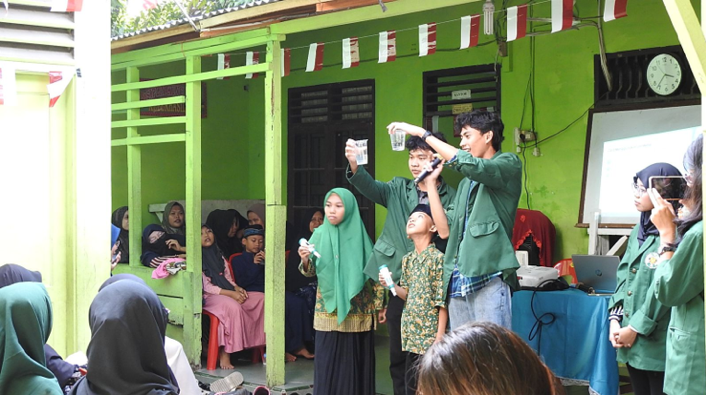
The massive flooding that struck Medan in November 2025 severely affected the Tanjung Gusta neighborhood in Medan Helvetia subdistrict, prompting the Al-Yahdi Medan Foundation to serve as an evacuation center. It also contaminated residents' clean Water sources, while the public still judges Water safety by visual clarity alone, without understanding pH as a key chemical indicator. This community service activity, under the Pioneer Service Program of the Vocational Faculty, Universitas Sumatera Utara, aimed to enhance the knowledge and skills of teachers, students, and parents at Al-Yahdi Foundation in assessing Water potability after the flood through education on pH parameters and training in portable pH meters, complementing simpler pH indicator (litmus) paper. Conducted at Al-Yahdi Foundation from April to November 2026, the activity comprised coordination, instrument design and validation, outreach, demonstrations, hands-on training, distribution of instruments and manuals, mentoring, and pretest–posttest evaluations. Average comprehension scores rose from 43.8 ('insufficient') to 87.0 ('good'). pH of Water samples from partner communities ranged from 5.9 to 7.2, with some outside the safe range set by Indonesia's Ministry of Health (6.5–8.5). This initiative effectively raised public awareness and fostered self-reliance in testing Water quality before consumption during post-flood recovery, supporting Sustainable Development Goals (SDGs) 3 and 6.
Keywords:
pH portable pH meter post-flood public education water qualityReferences
Badan Penanggulangan Bencana Daerah (BPBD) Kota Medan. (2025). Laporan kejadian banjir Kota Medan November 2025.
Birhan, T. A., Bitew, B. D., Dagne, H., Amare, D., Azanaw, J., Andualem, Z., Dessie, A., Guyasa, G., Getaneh, A., Addisu, A., Genet, M., Tadege, G., Tesfaye, A. H., Asmare, T., & Yimer, T. F. (2023). Household drinking water quality and its predictors in flood-prone settings of Northwest Ethiopia: A cross-sectional community-based study. Heliyon, 9, Article e15072. https://doi.org/10.1016/j.heliyon.2023.e15072
Freeman, M. C., & Clasen, T. (2011). Assessing the impact of a school-based safe water intervention on household adoption of point-of-use water treatment practices in Southern India. The American Journal of Tropical Medicine and Hygiene, 84(3), 370–378. https://doi.org/10.4269/ajtmh.2011.10-0361
Indriyana, A., & Susilowati, T. (2026). Overview of knowledge and behavior of clean and healthy living patterns post flood. OVUM: Journal of Midwifery and Health Sciences, 6(1), 11–19. https://doi.org/10.47701/xkgy1882
Kementerian Kesehatan Republik Indonesia. (2017). Peraturan Menteri Kesehatan Republik Indonesia Nomor 32 Tahun 2017 tentang Standar Baku Mutu Kesehatan Lingkungan dan Persyaratan Kesehatan Air untuk Keperluan Higiene Sanitasi, Kolam Renang, Solus Per Aqua, dan Pemandian Umum.
Kementerian Kesehatan Republik Indonesia. (2023). Pedoman kualitas air minum.
Miller, J. D., Young, S. L., et al. (2024). Self-reported anticipated harm from drinking water across 141 countries. Nature Communications, 15, Article 5528. https://doi.org/10.1038/s41467-024-51528-
Pérez-López, C. A., Pantoja, W., Pérez-Taborda, J. A., & Ávila, A. (2023). PortAqua: A low-cost, compact water quality meter for science communication. Environmental Monitoring and Assessment, 195(2), Article 267. https://doi.org/10.1007/s10661-022-10804-3
Rizky, A., Pratama, D., & Wulandari, S. (2023). Efektivitas alat ukur pH berbasis sensor elektronika sederhana untuk pemantauan kualitas air di tingkat komunitas. Jurnal Teknologi Tepat Guna, 10(2), 45–58.
Santoso, B., & Hasibuan, R. (2022). Pemberdayaan masyarakat melalui edukasi teknologi tepat guna dalam pengelolaan risiko kesehatan lingkungan. Jurnal Pengabdian Kepada Masyarakat, 8(1), 112–124.
Saputra, R. R., Oksal, E., & Alfanaar, R. (2025). Sosialisasi standar kualitas air bersih dan solusi penanganan air asam bagi warga Perumahan Casadova. Welfare: Jurnal Pengabdian Masyarakat, 3(1). https://doi.org/10.30762/welfare.v3i1.2171
Siregar, Z., Nasution, A. J., Lianto, Y. D., Hanum, S. R., Abdullah, I., Puspita, R., & Nasution, A. F. (2026). Pengembangan model Community Water Quality Screening berbasis TDS meter dan pH meter untuk meningkatkan literasi masyarakat terhadap air layak konsumsi di Desa Bandar Baru. Jurnal Derma Pengabdian Dosen Perguruan Tinggi (Jurnal DEPUTI), 6(2), 538–554. https://doi.org/10.54123/deputi.v6i2.570
Syahputra, M., & Lubis, F. (2021). Analisis risiko pencemaran air sumur pasca banjir di kawasan perkotaan Medan. Jurnal Kesehatan Lingkungan Indonesia, 20(1), 33–41.
Syavitri, D., Suliestyah, S., Sutadiwiria, Y., Jambak, M. A., Rendy, R., Ronoatmojo, I. S., Herdiansyah, F., Prakoso, S., Wijaya, B., 'Afin, L., & Maharani, S. (2025). Training on water acidity level (pH) measurement for disease prevention in Sukmajaya Subdistrict, Depok City. Community Empowerment, 10(1), 147–152. https://doi.org/10.31603/ce.12176
Tabassom, T., Talukder, P., & Shuvo, S. H. (2025). Assessment of changes in drinking water quality before and after floods in Jamalpur District primary schools of Bangladesh. International Journal of Research and Scientific Innovation. https://doi.org/10.51244/ijrsi.2024.11150075p
Tshuma, M., Belle, J., & Ncube, A. (2023). An analysis of factors influencing household Water, Sanitation, and Hygiene (WASH) experiences during flood hazards in Tsholotsho District using a Seemingly Unrelated Regression (SUR) model. Water, 15(2), Article 371. https://doi.org/10.3390/w15020371
Tufail, M., Nasir, M. J., Rahman, A.-U., Kakakhel, S. I., Ashraf, M., & Tariq, A. (2025). Community perceptions of potable water quality and public health implications in flood-affected areas of Nowshera District, Pakistan. World Development Perspectives, 38, Article 100679. https://doi.org/10.1016/j.wdp.2025.100679
United Nations Development Programme. (2023). Sustainable development goals: Goal 6 – Clean water and sanitation.
World Health Organization. (2022). Guidelines for drinking-water quality: Fourth edition incorporating the first and second addenda.
License
Copyright (c) 2026 Dona Tiara Lubis, Juli Novita Sari, Subhan Fahmi Nasution

This work is licensed under a Creative Commons Attribution-ShareAlike 4.0 International License.