STRENGTHENING DIGITAL AND ISLAMIC FINANCIAL LITERACY TO ADDRESS FRAUDULENT INVESTMENTS AND ONLINE GAMBLING AMONG DAYAH STUDENTS IN ACEH
Published:
2026-11-03Downloads
Abstract
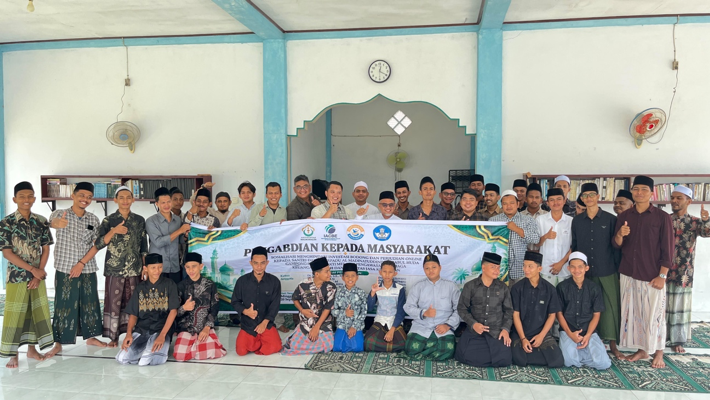
This article documents a participatory community service program on digital safety, fraudulent investments, and online gambling at Al Madinatuddiniyah Babul Huda Dayah, Padang Sakti, Lhokseumawe, Aceh, on 21 September 2026. The program aimed to strengthen students’ exposure to responsible smartphone use, financial risk awareness, and Islamic ethical principles. Its activities comprised institutional coordination, two interactive educational sessions, case-based explanations, discussion, and questions and answers. The first session discussed constructive digital practices and personal data protection; the second addressed warning signs of deceptive investment offers and the risks of online gambling. A descriptive qualitative account was developed from implementation narratives, learning materials, and activity photographs. The records document delivery of the planned content and opportunities for participant interaction, but do not include standardized baseline assessments, post-tests, or behavioral follow-up. Therefore, increases in knowledge or changes in behavior cannot be established quantitatively. The program illustrates a context-sensitive approach to integrating digital literacy, financial consumer protection, and Islamic values in dayah-based education, while highlighting the need for structured evaluation and continuing institutional support.
Keywords:
dayah education digital literacy financial fraud Islamic finance online gamblingReferences
Gainsbury, S. M. (2015). Online gambling addiction: The relationship between internet gambling and disordered gambling. Current Addiction Reports, 2, 185–193. https://doi.org/10.1007/s40429-015-0057-8
Government of Indonesia. (2011). Law Number 21 of 2011 concerning the Financial Services Authority (Undang-Undang Nomor 21 Tahun 2011 tentang Otoritas Jasa Keuangan).
Khaddafi, M., Ilham, R. N., Fuadi, F., Marzuki, M., & Juanda, R. (2021). Development of communities of traders and private households in realizing independent welfare through the movement of love to saving shares (GERMAS) in Gampong Blang Pulo as a gampong investment model. IRPITAGE Journal, 1(1), 29–34.
Lusardi, A., & Mitchell, O. S. (2014). The economic importance of financial literacy: Theory and evidence. Journal of Economic Literature, 52(1), 5–44. https://doi.org/10.1257/jel.52.1.5
Nadzir, M. (2015). Membangun pemberdayaan ekonomi di pesantren. Economica: Jurnal Ekonomi Islam, 6(1), 37–56.
Ng, W. (2012). Can we teach digital natives digital literacy? Computers & Education, 59(3), 1065–1078. https://doi.org/10.1016/j.compedu.2012.04.016
Noor, M. (2011). Pemberdayaan masyarakat. CIVIS: Jurnal Ilmiah Ilmu Sosial dan Pendidikan Kewarganegaraan, 1(2).
Organisation for Economic Co-operation and Development. (2020). OECD/INFE 2020 international survey of adult financial literacy. OECD.
Otoritas Jasa Keuangan. (2021). Strategi Nasional Literasi Keuangan Indonesia (SNLKI) 2021–2025. OJK.
Otoritas Jasa Keuangan. (2023). Peraturan Otoritas Jasa Keuangan Republik Indonesia Nomor 22 Tahun 2023 tentang pelindungan konsumen dan masyarakat di sektor jasa keuangan. OJK.
UNESCO Institute for Statistics. (2018). A global framework of reference on digital literacy skills for indicator 4.4.2 (Information Paper No. 51). UNESCO Institute for Statistics.
van Laar, E., van Deursen, A. J. A. M., van Dijk, J. A. G. M., & de Haan, J. (2017). The relation between 21st-century skills and digital skills: A systematic literature review. Computers in Human Behavior, 72, 577–588. https://doi.org/10.1016/j.chb.2017.03.010
Widjajanti, K. (2011). Model pemberdayaan masyarakat. Jurnal Ekonomi Pembangunan, 12(1), 15–27.
License
Copyright (c) 2026 Rico Nur Ilham, Irada Sinta, Muttaqien, Fuadi, Reza Juanda, Tahara Alsura

This work is licensed under a Creative Commons Attribution-ShareAlike 4.0 International License.
Downloads
How to Cite