INJURY MECHANISMS AND SURVIVAL IN FIGHTER AIRCRAFT EJECTIONS BASED ON A SYSTEMATIC REVIEW
Published:
2026-04-09Downloads
Abstract
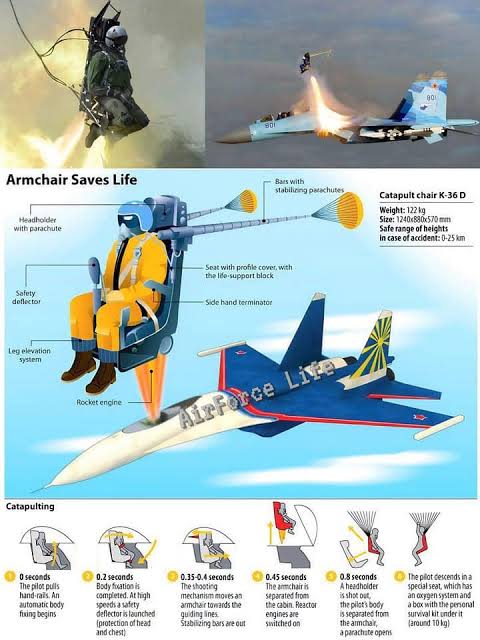
The ejection seat system in fighter aircraft is a safety technology that plays a crucial role in saving pilots in flight emergencies. However, the high vertical acceleration during the early ejection phase and the propulsion phase exposes pilots to significant axial loads, increasing the risk of spinal cord injury. This systematic review was conducted following PRISMA 2020 guidelines by reviewing literature from Scopus (n = 20) and PubMed (n = 12) databases. After screening and assessing eligibility, 15 studies were included in the qualitative synthesis. The results showed that axial compression of the spine during the early ejection phase was the most common injury mechanism. Vertebral fractures, particularly in the thoracolumbar segment, were the most frequently reported acute injuries. In addition to biomechanical factors, pilot survival is also influenced by operational factors, particularly the timing of the ejection decision and the altitude at which ejection was initiated. Delayed ejection has been reported to be associated with an increased risk of fatality. Thus, injury severity and survival are influenced by the interaction between axial biomechanical loads and operational decisions in emergency situations. These findings demonstrate the importance of an integrated safety approach through the development of ejection system designs, improvements to operational training, and monitoring the occupational health of fighter aircraft crews.
Keywords:
Fighter aircraft Ejection Seat Spinal compression Survivability Axial acceleration Operational limitsReferences
Abdulwahab, S. S. (2021). Prevalence of Low Back Pain among Military Fast Jet Pilots. Aerospace Medicine and Human Performance, 92(5), 378–384.
Ata, N., & Yazgan, E. (2022). Analysis of the pilots’ decisions to eject in F-16 fighter aircraft accidents in Turkey. International Journal of Sustainable Aviation, 8(1), 91. https://doi.org/10.1504/ijsa.2022.120610
BASTUG, E., SERIN, N., & ELALDI, F. (2025). Trajectory analysis and flight modeling of combat aircrafts ejection seats. Chinese Journal of Aeronautics, 38(2), 103267. https://doi.org/10.1016/j.cja.2024.09.043
Damon, A. M., Lessley, D. J., Salzar, R. S., Bass, C. R., Shen, F. H., Paskoff, G. R., & Shender, B. S. (2010). Kinematic response of the spine during simulated aircraft ejections. Aviation Space and Environmental Medicine, 81(5), 453–459. https://doi.org/10.3357/ASEM.2688.2010
Daudin, M., Renard, M. D., Louzon, V., Chollet, S., & Colas, M. D. (2013). Ejection in hostile environments: Medico-psychological aspects for the fighter pilot. Aviation Space and Environmental Medicine, 84(8), 856–858. https://doi.org/10.3357/ASEM.3596.2013
Epstein, D., Markovitz, E., Nakdimon, I., Guinzburg, A., Aviram, E., Gordon, B., Shapira, S., Sharon, S., Steinfeld, Y., Miller, A., & Lipsky, A. M. (2020). Injuries associated with the use of ejection seats: a systematic review, meta-analysis and the experience of the Israeli Air Force, 1990-2019. Injury, 51(7), 1489–1496. https://doi.org/10.1016/j.injury.2020.04.048
Gualdi-Russo, E., & Zaccagni, L. (2026). The Newcastle–Ottawa Scale for Assessing the Quality of Studies in Systematic Reviews. Publications, 14(1), 4. https://doi.org/10.3390/publications14010004
Lewis, M. E. (2006). Survivability and injuries from use of rocket-assisted ejection seats: Analysis of 232 cases. Aviation Space and Environmental Medicine, 77(9), 936–943.
Lowry, M., Mellen, P., & Weedn, V. (1994). Ejection Seat Aircraft Fatalities in the United States Military, 1966 to 1990. Journal of Forensic Sciences, 39(5), 1153–1160. https://doi.org/10.1520/jfs13699j
Lunny, C., Jain, N., Nazari, T., Kosaner-Kließ, M., Santos, L., Goodman, I., Osman, A. A. M., Berrone, S., Dadam, M. N., Brenna, C. T. A., Hussein, H., Dahdal, G., Cespedes, D. A., Ferri, N., Kanji, S., Chi, Y., Pieper, D., Shea, B., Parker, A., … Tricco, A. C. (2025). Exploring the methodological quality and risk of bias in 200 systematic reviews: A comparative study of ROBIS and AMSTAR-2 tools. Research Synthesis Methods, 17, 63–92. https://doi.org/10.1017/rsm.2025.10032
Miles, J. E. (2015). Factors associated with delayed ejection in mishaps between 1993 and 2013. Aerospace Medicine and Human Performance, 86(9), 774–781. https://doi.org/10.3357/AMHP.4057.2015
Newman, D. G. (2013). Survival outcomes in low-level ejections from high performance aircraft. Aviation Space and Environmental Medicine, 84(10), 1061–1065. https://doi.org/10.3357/ASEM.3626.2013
Osborne, R. G., & Cook, A. A. (1997). Vertebral fracture after aircraft ejection during Operation Desert Storm. Aviation Space and Environmental Medicine, 68(4), 337–341.
Page, M. J., McKenzie, J. E., Bossuyt, P. M., Boutron, I., Hoffmann, T. C., Mulrow, C. D., Shamseer, L., Tetzlaff, J. M., Akl, E. A., Brennan, S. E., Chou, R., Glanville, J., Grimshaw, J. M., Hróbjartsson, A., Lalu, M. M., Li, T., Loder, E. W., Mayo-Wilson, E., McDonald, S., … Moher, D. (2021). The PRISMA 2020 statement: An updated guideline for reporting systematic reviews. Journal of Clinical Epidemiology, 134, 178–189. https://doi.org/10.1016/j.jclinepi.2021.03.001
Parate, B. A. (2022). Science And Technology of Aircraft Seat Ejection: Advanced Concepts. Cogent Engineering, 9(1). https://doi.org/10.1080/23311916.2022.2034267
Parate, B. A. (2025). Root Cause Analysis for a Gas Generator and Ejection Seat System for Aircraft Applications. Central European Journal of Energetic Materials, 22(2), 166–179. https://doi.org/10.22211/cejem/205988
Sommer, F., Gadjradj, P. S., & Pippig, T. (2023). Spinal injuries after ejection seat evacuation in fighter aircraft of the German Armed Forces between 1975 and 2021. Journal of Neurosurgery: Spine, 38(2), 271–278. https://doi.org/10.3171/2022.8.SPINE22644
Stępień, S., Szajnar, S., & Jasztal, M. (2017). Problems of military aircraft crew’s safety in condition of enemy counteraction. Eksploatacja i Niezawodnosc – Maintenance and Reliability, 19(3), 441–446.
Tandon, A., Verma, V. B., & Chaturvedi, S. K. (2023). Hierarchical Reliability Modelling and Analysis of Life Support System of Fighter Aircraft. International Journal of Mathematical, Engineering and Management Sciences, 8(4), 595–611. https://doi.org/10.33889/IJMEMS.2023.8.4.034
Yang, Y., Liu, S., Ling, M., & Ye, C. (2022). Prevalence and Potential Risk Factors for Occupational Low Back Pain Among Male Military Pilots: A Study Based on Questionnaire and Physical Function Assessment. Frontiers in Public Health, 9(January), 1–10. https://doi.org/10.3389/fpubh.2021.744601
Zeng, J., Liu, X. P., Yi, J. C., Lu, X., Liu, D. D., Jiang, Y. Q., Liu, Y. B., & Tian, J. Q. (2022). Analysis of two naval pilots’ ejection injuries: Two case reports. World Journal of Clinical Cases, 10(24), 8667–8672. https://doi.org/10.12998/wjcc.v10.i24.8667
Zivkovic, M. M., Inman, B. L., Figlewicz, M. R., Burchett, J. A., & Nowadly, C. D. (2024). Polytrauma in a Jet Pilot After Low-Altitude Ejection Without Parachute Deployment. Aerospace Medicine and Human Performance , 95(11), 862–866. https://doi.org/10.3357/AMHP.6412.2024
License
Copyright (c) 2026 Muhammad Hilmi Wiratama, Indri Hapsari Susilowati

This work is licensed under a Creative Commons Attribution-ShareAlike 4.0 International License.
Downloads
How to Cite