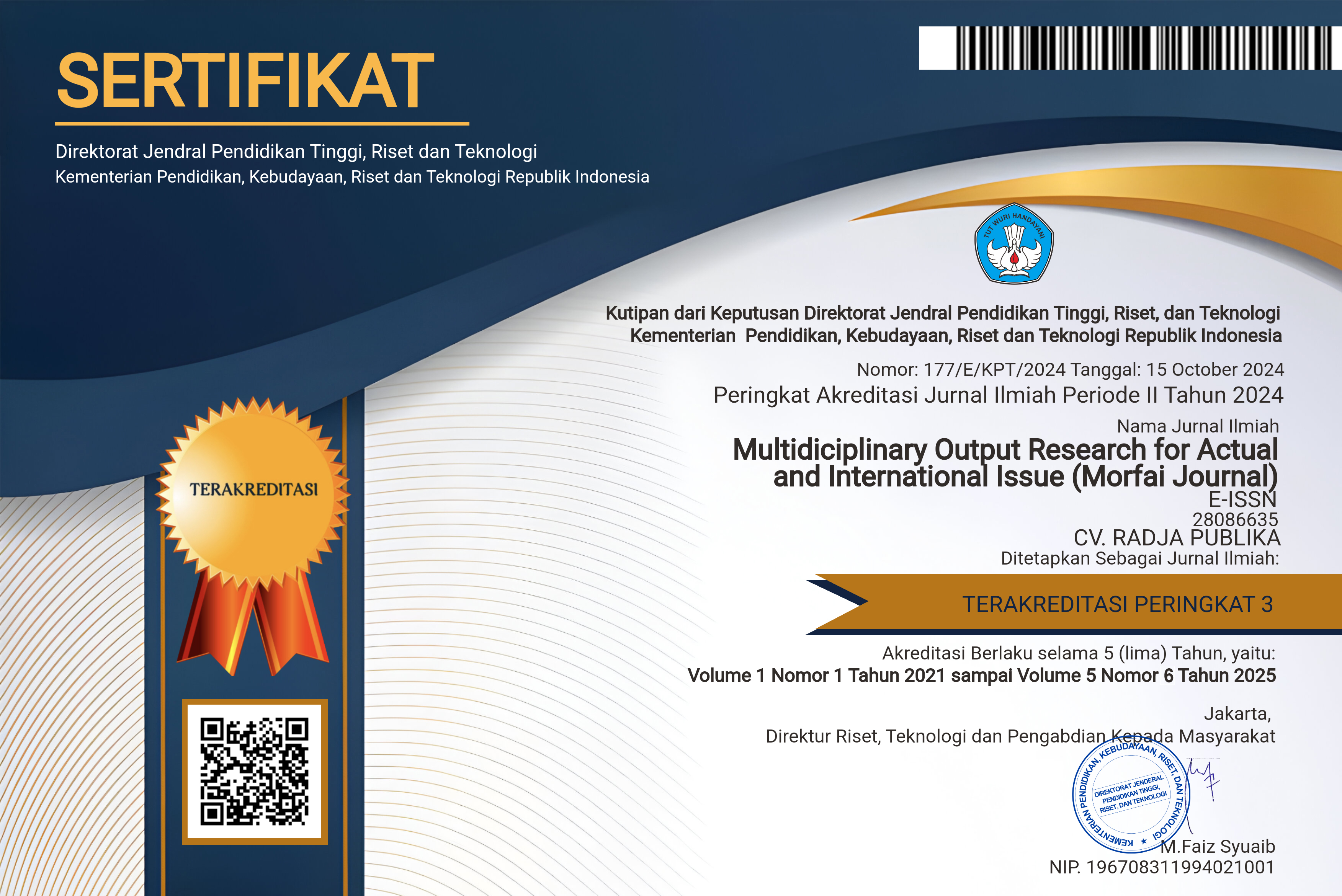
COLLABORATIVE GOVERNANCE IN THE MANAGEMENT OF LIGHT RAIL TRANSIT (LRT) IN THE CITY OF PALEMBANG
Published:
2026-06-17Downloads
Abstract
Study This aim For analyzing Collaborative Governance in management of Light Rail Transit (LRT) in Palembang City. The presence of LRT as transportation modern mass is expected capable reduce congestion, increasing mobility society, and create system transportation sustainable urban development. However, Thus, the management of the Palembang LRT is still face various challenges, such as low level occupation passengers, height cost operational, not yet optimally integration between fashion transportation, as well as weakness coordination between stakeholder interests. Research This use method study qualitative approach descriptive. Data collection techniques are carried out through observation, interviews, documentation, and studies literature. Research results show that Collaborative Governance in Palembang LRT management has not yet walk optimally. Coordination between government area, LRT operator, sector private sector and community Still face various obstacles, especially in aspect communication, integration service transportation, and participation society. In addition, sustainability LRT operations are still very dependent on subsidies government Because low income operational. Research This conclude that strengthening collaboration between stakeholders, increasing integration transportation, as well as involvement public in a way active become factor important in increase effectiveness and sustainability LRT management in Palembang City.
Keywords:
collaborative governance sustainability light rail transit service public transportation urbanReferences
Ansell, C., & Gash, A. (2007). Collaborative Governance in Theory and Practice. Journal of Public Administration Research and Theory , 18(4), 543–571.
Asteriniah, F., Wijaya, AF, Hermawan, H., & Danar, OR (2023). Collaborative Governance in Urban Transportation Planning: A Case Study of Palembang LRT. Journal of Urban Transportation Studies , 12(2), 45–59.
Asteriniah, F. et al. (2025). Collaborative Governance in Light Rail Transit Services in Palembang City: A Multi-Helix Perspective. International Journal of Public Policy , 10(1), 88–102.
Creswell, JW (2016). Research Design: Qualitative, Quantitative, and Mixed Methods Approaches . Yogyakarta: Pustaka Pelajar.
Emerson, K., & Nabatchi, T. (2015). Collaborative Governance Regimes . Washington DC: Georgetown University Press.
Gülçimen, Y. et al. (2021). Sustainability Assessment of Light Rail Transit Systems in Urban Areas. Sustainable Transportation Journal , 8(3), 120–134.
Hadi, S., & Juwono, TB (2019). Governance Challenges in Indonesian Light Rail Transit Development. Transportation Policy Review , 5(2), 66–78.
Hairi, MA (2020). Governance and Administrative Process of the Light Rail Train Project in Palembang. Journal of Public Administration , 7(1), 22–34.
Ibrahim, R. et al. (2021). Stakeholder Collaboration and Passenger Satisfaction in Kuala Lumpur LRT Systems. Asian Transportation Studies , 14(2), 99–115.
Miles, M. B., Huberman, A. M., & Saldaña, J. (2014). Qualitative Data Analysis: A Methods Sourcebook (3rd ed.). California: Sage Publications.
Putra, E. et al. (2020). Public-Private Partnerships in the Palembang LRT Project. Journal of Infrastructure Development , 9(1), 55–70.
Riza, E. et al. (2019). Collaborative Approaches to Public Transportation Governance in Southeast Asia. Urban Governance Journal , 6(2), 87–101.
Sussman, J. M. (2000). Introduction to Transportation Systems . Boston: Artech House.
Yen, BT et al. (2018). Impact of Light Rail Transit Development on Urban Economic Growth. Transportation and Urban Development Journal , 11(4), 211–225.
Yulia, S. et al. (2022). The Role of Community Participation in Palembang's LRT Development. Indonesian Journal of Public Policy , 15(3), 144–158.
License
Copyright (c) 2026 M. Yoga Jusri Pratama, Alfitri, Abdul Nadjib, Raniasa Putra

This work is licensed under a Creative Commons Attribution 4.0 International License.